

back

The advantages of reciprocating movement for curved canals are closely tied to how this technique enhances control and reduces procedural risks. As a dental instrument supplier, NIC Dental often observes that curved canals increase the likelihood of file fatigue and canal transportation. Reciprocating movement, with its alternating angles of rotation, minimizes torsional stress and lowers the chance of instrument separation. This motion allows the file to disengage periodically, offering smoother progression through tight curves and improving shaping safety. Based on NIC Dental’s experience supporting clinicians worldwide, this approach integrates naturally with a modern endodontic rotary file system, helping maintain the original canal anatomy while delivering stable and predictable performance.
Enhancing Flexibility Through Advanced NiTi Metallurgy
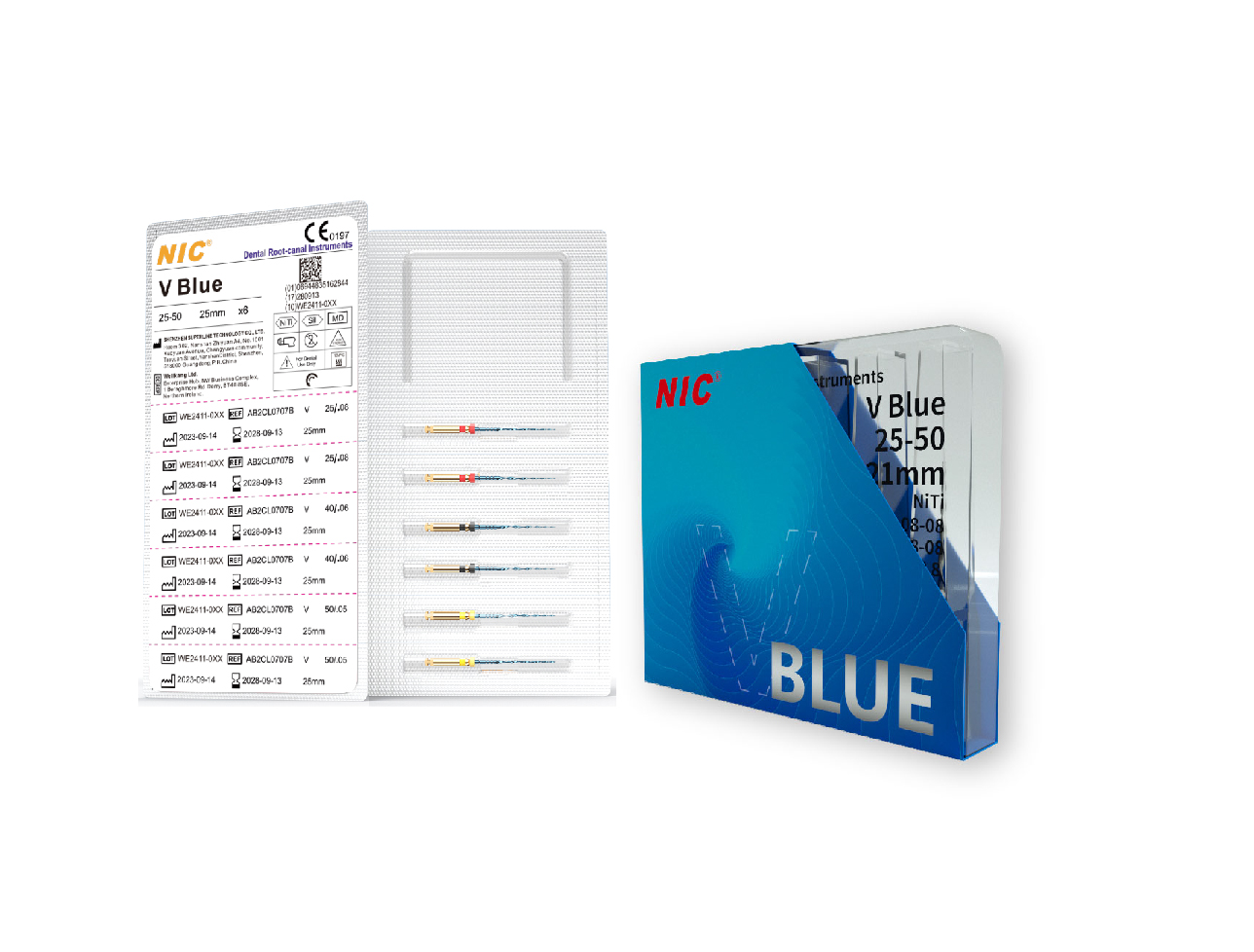
Another key advantage of reciprocating movement lies in how well it works with advanced heat-treated NiTi alloys. As NIC Dental, we apply our expertise in NiTi material science to create files that complement the reciprocating technique, especially in curved canals. With SLT’s long-standing background—led by founders who are NiTi material PhDs—we continuously refine flexibility, fatigue resistance, and file geometry. This technical strength allows our products to function effectively even under demanding reciprocating conditions. By pairing reciprocation with our endodontic rotary file system, clinicians gain a balance of flexibility, cutting performance, and durability. This combination is particularly valuable for complex canals where smooth progression and structural integrity are essential.
Operational Efficiency and Reduced Learning Curve
Reciprocating movement also offers practical benefits that support clinical efficiency. Many clinicians find that this motion lowers the risk of taper lock and reduces the number of instruments required for a complete preparation. As a dedicated dental instrument supplier, we understand the importance of streamlined workflow in endodontics. Reciprocation often shortens shaping time and decreases the need for manual pressure, which helps make the technique accessible even for newer practitioners. When applied with our endodontic rotary file system, these advantages contribute to consistent shaping results and simplified operation across diverse clinical cases.
Conclusion
Overall, the advantages of reciprocating movement for curved canals include improved safety, reduced instrument stress, enhanced flexibility, and greater operational efficiency. At NIC Dental, we align these clinical needs with our continuous innovation in endodontic technologies. Supported by SLT’s strong R&D foundation, advanced CNC manufacturing capabilities, and CE, FDA, and ISO certifications, our solutions deliver dependable performance for practitioners treating complex anatomies. As an experienced dental instrument supplier, we remain committed to providing reliable, high-precision tools through our endodontic rotary file system, helping clinicians achieve effective and predictable outcomes.